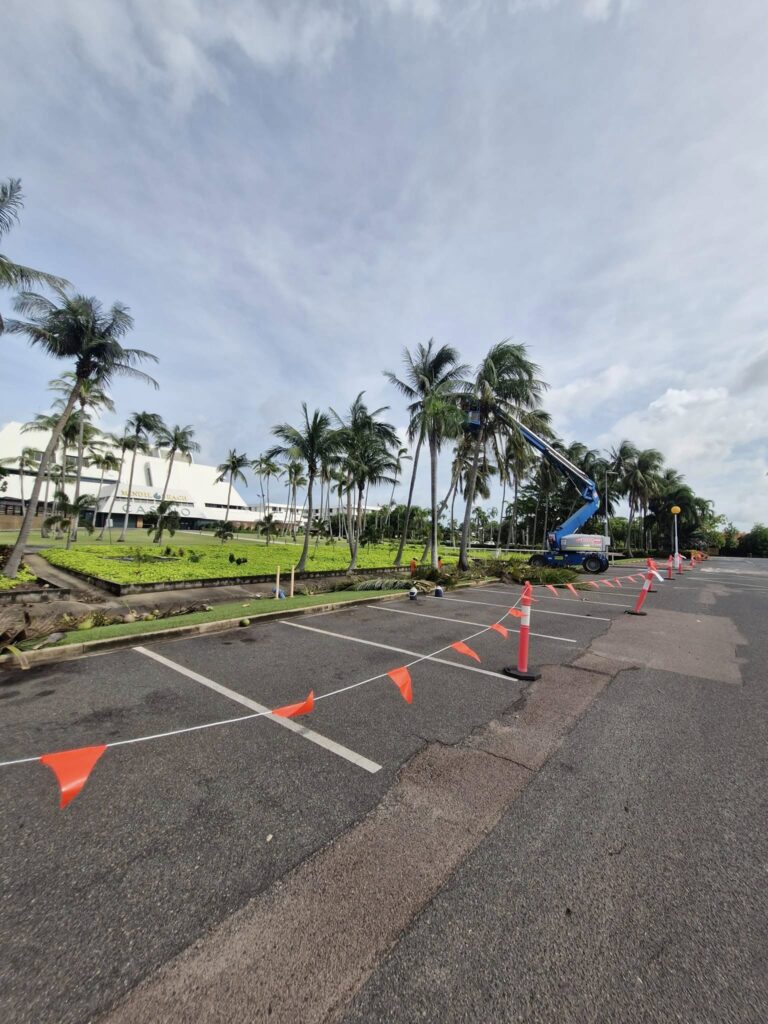
In Humpty Doo’s fast-growing tropical environment, unmanaged vegetation can quickly shift from a landscape feature into a structural and safety concern. This is where professional tree lopping Humpty Doo services, combined with structured arborist assessment and vegetation management, become essential for residential properties.
Without regular tree pruning, canopy reduction, and hazard reduction strategies, trees can develop excessive weight, structural imbalance, and storm vulnerability. Over time, this may lead to the need for tree cutting or even full tree removal.
Tree Pruning for Structural Stability and Early Tree Management
Tree pruning is the first stage of responsible tree maintenance. It focuses on controlled branch removal to maintain shape, improve structure, and prevent long-term risk development.
Crown thinning and airflow improvement
Crown thinning helps reduce density within the canopy, allowing better airflow and light penetration. This reduces wind resistance and lowers the chance of branch failure during storms.
Structural correction through selective pruning
Selective pruning targets weak, crossing, or dead branches. This improves long-term stability and helps guide healthy growth patterns, especially in fast-growing Humpty Doo vegetation.
End-weight reduction for branch safety
Reducing weight at the outer ends of branches prevents excessive stress on limb joints, reducing the likelihood of sudden breakage under pressure.
Tree Lopping for Canopy Reduction and Growth Control
When trees exceed manageable size, tree pruning alone is no longer enough. Tree lopping Humpty Doo becomes necessary for restoring balance and controlling excessive canopy growth.
Managing excessive height and spread
Tree lopping is commonly used to reduce overall tree height and spread when branches begin interfering with roofs, fences, or surrounding structures.
Restoring structural balance in overgrown trees
Uneven canopy development can create instability. Lopping helps redistribute weight more evenly across the tree structure.
Improving residential space usability
Overgrown trees can limit sunlight, airflow, and usable garden space. Canopy reduction restores functionality to outdoor areas.
Tree Risk Assessment and Hazard Reduction Strategies
Tree management is not only about cutting or trimming but also about evaluating risk before failure occurs. Arborist-led tree risk assessment plays a critical role in determining the right intervention.
Identifying internal decay and hidden defects
Trees may appear healthy externally while internal decay progresses unnoticed. Risk assessment identifies structural weaknesses early.
Evaluating storm vulnerability
Trees with dense canopies or weak branch unions are more likely to fail during storm conditions. Hazard reduction strategies aim to reduce this exposure.
Preventing structural failure through targeted reduction
When risk levels are identified, targeted pruning, tree cutting, or canopy reduction is applied to reduce the likelihood of sudden failure.
Tree Removal as a Final Safety Intervention
Tree removal is considered when a tree can no longer be safely maintained through pruning or lopping methods. It is a risk elimination process rather than a cosmetic decision.
When structural failure becomes irreversible
Severe decay, trunk damage, or root instability can make recovery impossible, requiring full removal for safety.
Managing high-risk proximity situations
Trees located near homes, driveways, or infrastructure may need removal if they pose ongoing hazard risks.
Completing the process with stump grinding
After tree removal, stump grinding ensures the remaining base is fully eliminated, preventing regrowth and restoring land usability.
Vegetation Management in Humpty Doo’s Climate Conditions
Humpty Doo’s climate encourages rapid vegetation growth, meaning tree management must be ongoing rather than occasional.
Continuous pruning cycles
Regular tree pruning ensures structural stability and prevents uncontrolled canopy expansion.
Scheduled canopy reduction
Periodic tree lopping helps maintain safe size limits for fast-growing species.
Ongoing arborist monitoring
Regular inspection ensures early detection of decay, imbalance, or storm vulnerability.
Storm Damage Prevention Through Proactive Tree Services
Storm conditions are a major risk factor in tropical environments. Without proper preparation, trees can become hazardous during high wind or heavy rainfall events.
Reducing canopy wind resistance
Crown reduction and thinning help decrease wind load across the tree structure.
Strengthening branch stability
Removing weak or overloaded limbs reduces the chance of storm-related breakage.
Preventing emergency tree removal situations
Proactive hazard reduction reduces the likelihood of emergency tree cutting after storm damage.
Tree Lopping Humpty Doo Services for Safe and Professional Tree Management
When trees in Humpty Doo begin to show signs of overgrowth, imbalance, or structural risk, delaying action can quickly lead to higher maintenance costs and increased safety hazards. In many cases, early intervention through tree pruning, tree lopping services in Humpty Doo, or arborist assessment can prevent the need for emergency tree removal later.
Professional tree services are essential when dealing with fast-growing vegetation in tropical environments. Whether it involves canopy reduction, hazard reduction pruning, or full tree cutting, the goal is always to restore safety, balance, and usability across residential properties.
If a tree has become too large, is interfering with structures, or is showing signs of decline, it is strongly recommended to arrange a professional inspection before the situation escalates. Tree risk conditions rarely improve on their own and typically worsen over time, especially during storm seasons.
Engaging qualified arborist services ensures the tree is assessed correctly and managed using the appropriate method, whether that involves pruning, lopping, or complete tree removal followed by stump grinding for full site restoration.
Acting early not only reduces risk but also helps maintain property value, prevents structural damage, and avoids emergency callouts caused by storm-related tree failure.
For properties in Humpty Doo, proactive tree management is the most reliable way to maintain safe and functional outdoor spaces throughout the year.